Carrier Heat Pumps in Woodland Hills
Quick read: Woodland Hills Carrier HVAC services and installs Carrier heat pumps across Woodland Hills 91364, from 25VNA4 Greenspeed conversions to value 27SCA5 swaps on Walnut Acres ranches, with Title-24 verification. A ducted install runs $6,000 to $16,000, so call (213) 513-5256 or book online for service or a conversion quote.
Quick details
- Greenspeed heat pumps: 25VNA4 (Infinity 24), 27VNA3, 27VNA1, 27VNA0
- Performance / Comfort: 27VPA9, 27TPA8, 27SPA6, 27SCA5
- Up to ~22 SEER2 / ~10.5 HSPF2 on the top Greenspeed tiers
- Regional floor here: 14.3 SEER2 paired with 7.5 HSPF2
- Ducted install: $6,000 - $16,000; repair $150 - $3,500 by part
- Possible LADWP/SCE rebates; confirm amounts (no federal 25C after 12/31/2025)
- Service area 91364, 91367, 91371; independent, all brands
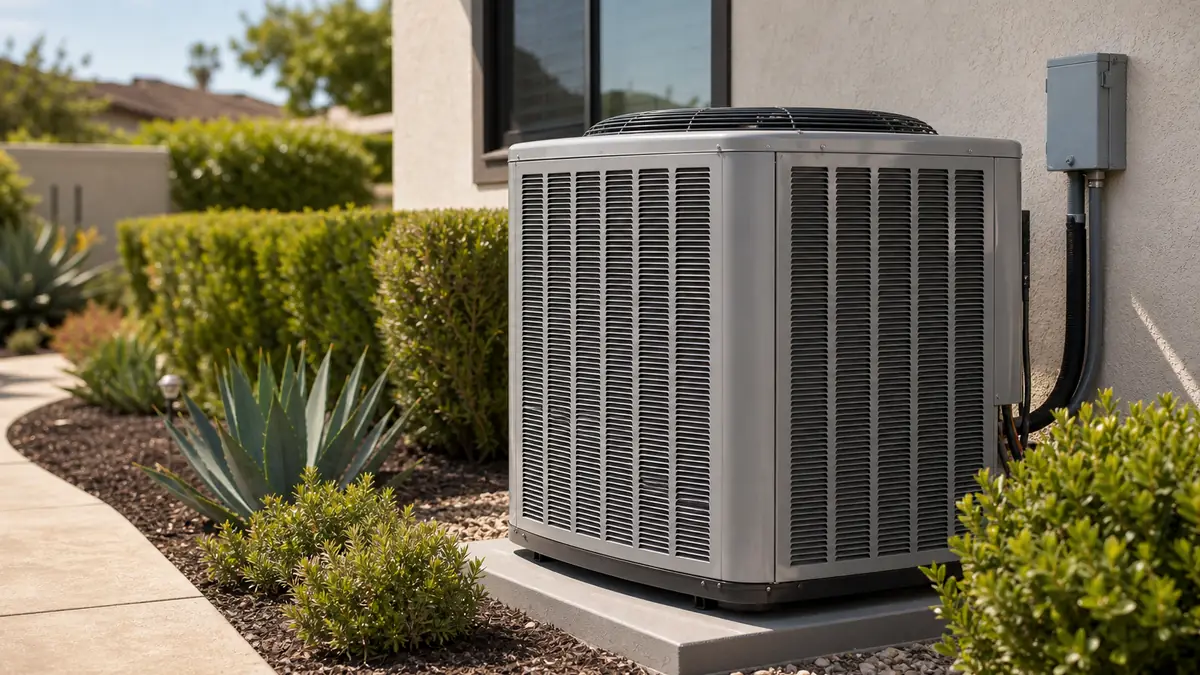
Why are heat pumps a good fit for Woodland Hills?
This neighborhood is cooling-dominant: you fight heat far more than cold. A heat pump is an air conditioner that can also run in reverse, so it delivers the same high cooling-side efficiency you need against the Climate Zone 9 load and then covers the light winter heating without a separate gas furnace. For a homeowner already replacing an aging AC, converting to a Carrier heat pump consolidates two systems into one electric package.
Which Carrier heat pump tier should I pick?
Tier tracks cooling runtime and duct condition, not the heating load, because in Climate Zone 9 the home cools far more hours than it heats. A budget single-stage 27SCA5 covers a rental or a moderate-use ranch; a two-stage 27TPA8 or variable-speed 27VPA9 Performance suits an owner-occupied home running cooling 12-plus hours a day; and a Greenspeed 25VNA4 or 27VNA3 earns its premium on a large rebuild with healthy ducts that can feed low-speed airflow. The installed lanes below are typical 2026 ranges, confirmed after a Manual J load calc and a static-pressure check.
| Tier | Model family | Installed cost lane |
|---|---|---|
| Value single-stage | 27SCA5 Comfort | $6,000 - $9,500 |
| Two-stage / variable mid | 27TPA8 / 27VPA9 Performance | $8,000 - $12,000 |
| Premium variable-speed | 25VNA4 / 27VNA3 Greenspeed | $11,000 - $16,000 |
What are the Carrier heat pump models, line by line?
Carrier's heat pumps run from a no-frills value condenser to the variable-speed Greenspeed flagship, across two naming generations still common in west-Valley homes. Here is what each is for.
| Model | What it is / key spec | Best fit |
|---|---|---|
| 25VNA4 | Infinity 24 Greenspeed, up to ~22 SEER2 / ~10.5 HSPF2 | Premium high-runtime conversion |
| 27VNA3 | Infinity 23 Greenspeed, most efficient HP | Top-efficiency all-electric home |
| 27VNA1 | Infinity 21 Ultimate Cold Climate Greenspeed | Exposed cold pocket; rarely needed here |
| 27VNA0 | Infinity 20 Greenspeed variable-speed | Variable-speed at a lower entry |
| 27VPA9 | Performance 19 variable-speed (InteliSense) | Quiet mid home without Infinity premium |
| 27TPA8 / 27SPA6 | Performance 18 two-stage / 16 single-stage | Balanced or budget mid-tier conversion |
| 27SCA5 | Comfort 16 single-stage value heat pump | Lowest-cost gas-free swap |
The Greenspeed models (25VNA4, 27VNA3, 27VNA1, 27VNA0) need the Infinity System Control to modulate; the Performance and Comfort heat pumps run on standard staging.
What fails on a Carrier heat pump here?
Because they cool most of the year, the failures mirror an AC: capacitors, contactors, and coil leaks lead the list. The heat-pump-specific issues are a stuck reversing valve that will not switch to heat and defrost-control or thermistor faults that ice the outdoor coil in winter. On Greenspeed models, 178/179 communication faults stop the inverter from modulating.
| Symptom / code | Cause and components | Cost lane |
|---|---|---|
| Hums, no start; Infinity 73 | Dual-run capacitor or contactor; condenser fan motor | $150 - $450 |
| Blows cool in heat mode | Stuck reversing valve or dead solenoid | $400 - $1,500 |
| Ices over, weak heat; code 56 | OAT/OCT thermistor or defrost control board | $225 - $900 |
| Long runs, weak output; code 44 / 54 | Airflow restriction or suction sensor; low refrigerant | $225 - $1,500 |
| Runs single-speed; codes 178 / 179 | Infinity control, inverter board, or A-B-C-D wiring | $400 - $2,000 |
| Compressor dead, breaker trips | Failed Greenspeed inverter compressor | $1,200 - $3,500 |
The heat pump repair page walks through the step-by-step diagnosis behind these codes.
What does a heat pump install need on the local housing stock?
A gas-to-electric conversion touches more of the home than an AC swap, and the older Woodland Hills stock raises three recurring questions. Electrical capacity comes first: a 1950s-1970s Walnut Acres ranch on a 100-amp panel may not have room for an air handler with backup heat strips, so a panel or circuit upgrade joins the scope. Ductwork is second: undersized original returns get sealed or upsized so the heat pump moves its rated airflow, especially the variable-speed units that need good low-speed flow. Third is access and placement, since hillside lots South of the Boulevard can mean long line sets and tight pad locations near windows where a quieter Greenspeed unit earns its premium. Every conversion carries the Climate Zone 9 Title-24 charge, airflow, and HERS duct verification.
Heat pump vs. keeping gas: the honest tradeoff
Converting to a heat pump consolidates two systems into one electric package, captures utility electrification rebates, and removes gas combustion from the home, and in cooling-dominant Woodland Hills the light winter heating load is easy for a heat pump to carry. The tradeoffs are real too: a conversion can require an electrical upgrade, the federal 25C credit is gone after 2025, and on the very coldest snaps a standard unit leans on electric backup heat that costs more per BTU than gas. A dual-fuel setup keeps a gas furnace as cold-morning backup for homes that want both. We model the specific numbers rather than assume one answer fits every house.
Is a Carrier heat pump right for your home?
A heat pump fits most Woodland Hills homes well because you cool far more than you heat, and the same equipment covers the mild winter. Lean toward a Greenspeed 25VNA4 or 27VNA3 for a large high-runtime home that wants quiet, efficient comfort; a Performance 27TPA8 or 27VPA9 for a balanced mid home; or a value 27SCA5 for the lowest-cost gas-free swap. Confirm panel capacity and duct health first, and weigh dual-fuel only if the home is large or the owner wants gas backup.
How do rebates change the conversion math?
Both LADWP and SCE promote heat-pump incentives that can shave a real slice off the install, and going electric takes the gas furnace out of the equation. The wrinkle: the federal 25C tax credit ended on December 31, 2025, and the state pools reopen in waves, so check the current amounts on the SEER2 and rebates guide before you count on a figure. Ready to convert? See heat pump installation.
Common questions
Which Carrier heat pump is the most efficient?
The 25VNA4 Infinity 24 and the 27VNA3 Infinity 23 are the top Greenspeed variable-speed heat pumps, reaching up to about 22 SEER2 and roughly 10.5 HSPF2 when paired with the Infinity System Control. For the mild Woodland Hills winter you do not need a cold-climate model, but you do benefit from the high cooling-side efficiency.
Do Carrier heat pumps heat well in Woodland Hills winters?
Comfortably, yes. Climate Zone 9 winters are mild, with frosty mornings rare, so even a standard-efficiency Carrier heat pump carries the heating load without backup strip heat running often. The bigger payoff is summer cooling efficiency, which is where these systems earn their keep here.
Can a heat pump replace both my AC and gas furnace?
Yes. That is the typical Woodland Hills conversion: pull the gas furnace, install a Carrier heat pump and matched air handler, and run one electric system year-round. We confirm electrical panel capacity and handle the Title-24 verification as part of the job.
What is the difference between the 25VNA4 and the 27 series?
The numbering reflects two Carrier naming generations. The 25VNA4 is the recent Infinity 24 flagship heat pump; the 27VNA3, 27VNA1, and 27VNA0 are the current Infinity 23, 21, and 20 Greenspeed heat pumps. All are variable-speed and need the Infinity System Control; the 27VNA1 is the cold-climate version, which Woodland Hills rarely requires.
Do Carrier heat pumps qualify for SEER2 rebates here?
They can. Utility electrification rebates (LADWP per-ton, SCE per-system) are tied to heat-pump efficiency tiers, so a higher-SEER2/HSPF2 Greenspeed unit typically unlocks more. The federal 25C tax credit ended on December 31, 2025, so it does not apply to a 2026 install; always verify the current utility amounts and funding status before counting on them.
How loud is a Carrier heat pump on a small lot?
It depends on the tier. A single-stage 27SCA5 runs at full speed and is the loudest; a variable-speed Greenspeed 25VNA4 spends most hours on low speed and is markedly quieter, which matters on a tight hillside lot South of the Boulevard where the outdoor unit sits near a window. Pad placement and a sound blanket also help.