Carrier HVAC Maintenance Calendar for Woodland Hills
Last updated June 13, 2026. A practical schedule for the west-Valley heat season.
Quick read: A Carrier system in Woodland Hills needs a spring AC tune-up before the first 100 F day, monthly summer filter changes, and a quick fall furnace check, so call Woodland Hills Carrier HVAC at (213) 513-5256 or book online to schedule a seasonal visit across 91364, 91367, and 91371.
Quick details
- Spring AC tune-up before the first heat wave (Feb-Apr)
- Check a 1-inch filter monthly in cooling season; replace every 30-60 days
- Rinse the outdoor condenser coil each spring and after Santa Ana dust
- Fall furnace check: flame sensor, igniter, pressure switch (Oct-Nov)
- Flush the condensate drain before summer to prevent ceiling leaks
- Skip mid-winter AC service; the system is idle
- Service area 91364, 91367, 91371; independent, all brands
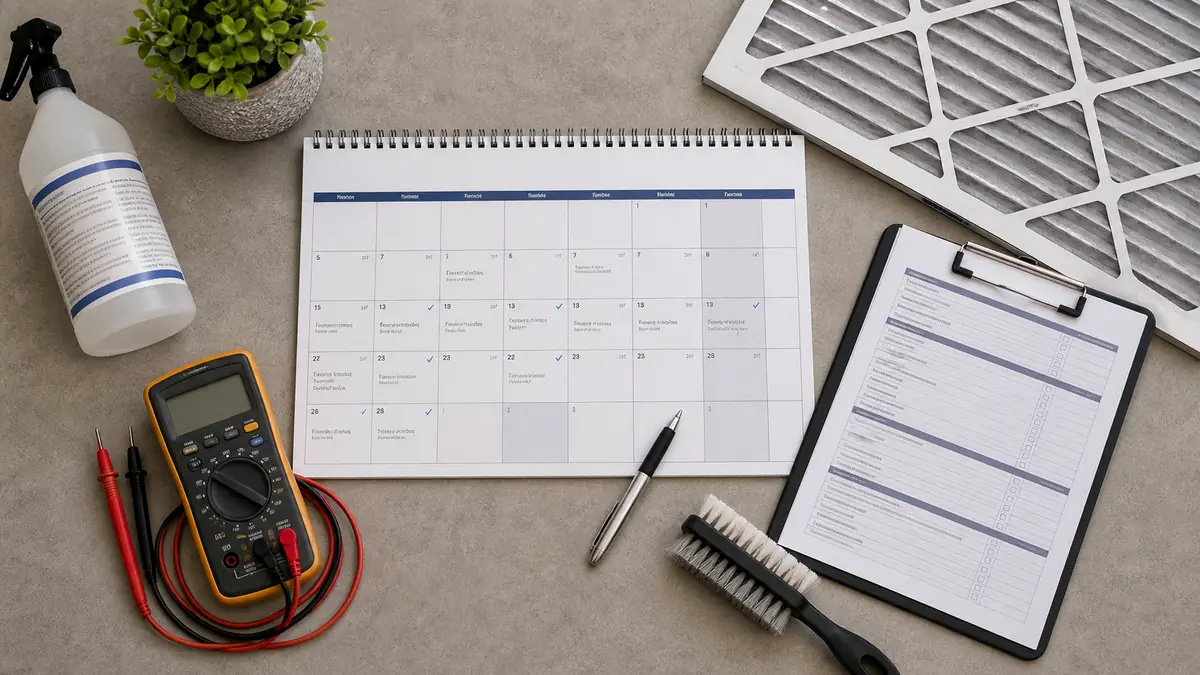
Why does the schedule need to be local?
A generic national maintenance calendar assumes a balanced heating and cooling year. Woodland Hills is nothing like that. As the hottest neighborhood in the City of Los Angeles, it runs cooling for the better part of the year and only leans on heat for a handful of mild weeks. So the calendar here is front-loaded toward the air conditioner: the cooling system gets the deep spring tune-up and the frequent in-season filter attention, while the furnace gets a lighter, well-timed check. Spending equal effort on both wastes money on the side that barely runs.
What is the month-by-month plan?
| Season | Task | Why it matters here |
|---|---|---|
| Feb-Apr | Full AC tune-up: capacitor, contactor, charge, coil | Catch marginal parts before the first 100 F day |
| May | Flush condensate drain, test float switch | Prevent attic-unit ceiling leaks under heavy cooling |
| Jun-Sep | Check and replace filter monthly; rinse condenser | Avoid iced coils and code 44 airflow faults |
| After Santa Ana winds | Clear debris off the outdoor coil | Dust and ash spike head pressure and amp draw |
| Oct-Nov | Fall furnace check: flame sensor, igniter, pressure switch | Prevent first-cold-morning lockouts (codes 14, 34) |
| Dec-Jan | Light use; skip AC service, monitor furnace | The cooling system is idle; do not pay to service it |
What does each month call for in Zone 9?
Because the cooling season here runs roughly eight months, the calendar is far more granular than a generic spring/fall split. Here is the month-by-month version tuned to the west-Valley heat pocket.
- January. Lightest month. Run the furnace occasionally to keep the inducer and igniter exercised, and listen for a rough start that hints at a tired igniter. The AC is idle; do not pay to service it.
- February. Book the spring AC tune-up now, before the schedule fills. Late winter is when a tech can find a marginal capacitor or low charge with zero pressure on the system.
- March. Complete the tune-up: capacitor microfarads, contactor, refrigerant superheat and subcooling, coil cleaning, and an Infinity touchscreen code read. Replace the filter heading into the season.
- April. Rinse the outdoor condenser coil and clear two feet of clearance around it. First mild heat days are a good real-world test that cooling holds.
- May. Flush the condensate drain and test the float switch before peak humidity, the single best way to prevent an attic-unit ceiling leak in July.
- June. Cooling season is on. Start the monthly filter check; a one-inch filter rarely lasts more than 30 to 60 days under heavy runtime.
- July. Peak load, 100 F-plus days. Check the filter again, watch for weak cooling or an iced coil, and clear the outdoor coil after any Santa Ana dust event.
- August. Still peak. Listen for a condenser that hums without spinning (a failing capacitor under maximum amp draw) and act before it strands you.
- September. Heat lingers into fall here. Keep the monthly filter cadence; do not relax it just because the calendar says autumn.
- October. Transition month. Do the fall furnace check: clean the flame sensor, inspect the igniter and pressure switch, and confirm a clean ignition before the first cold morning.
- November. First real heating use. A furnace that locks out with a 14 or 34 now usually had a fault that the October check would have caught.
- December. Light heating only. Replace the filter once more, and skip AC service entirely; the cooling system is asleep.
What can I do myself versus call for?
Filter changes, rinsing the outdoor coil with a gentle hose, and keeping two feet of clearance around the condenser are homeowner jobs, and they prevent a surprising share of failures. Leave the rest to a tech: measuring capacitor microfarads, checking refrigerant superheat and subcooling, cleaning a flame sensor, and testing the contactor and float switch all need tools and training. The spring visit is where a pro catches the marginal capacitor that would otherwise quit on the worst day of summer.
How do Santa Ana winds change the routine?
The Santa Ana events that spike Woodland Hills into triple digits also load the air with dust and, in fire years, ash, and that debris goes straight into the outdoor condenser coil. A coil packed with grit cannot reject heat, so head pressure and compressor amp draw climb exactly when the system is already working hardest against a 100 F-plus afternoon. The fix is simple and off-cycle: after a notable Santa Ana or any nearby brush event, kill power at the disconnect and rinse the condenser fins from the inside out with a gentle hose, never a pressure washer, which bends the fins. Pair that with the monthly filter check and you remove the two airflow chokepoints, supply and rejection, that the wind season attacks. On the hillside lots South of the Boulevard and around Valley Circle, where units sit closer to open brush, this is worth doing more than once a season.
How does maintenance change for a Greenspeed system?
Variable-speed Infinity and Greenspeed systems are more sensitive to airflow and communication than a single-stage unit, so filter discipline matters even more, and the spring check should include reading the Infinity touchscreen for any stored codes like 44, 178, or 179. The payoff is that a well-maintained Greenspeed holds its high SEER2 efficiency; a neglected one quietly drifts toward single-speed operation. See the Infinity Greenspeed page and the fault-code guide for what those readings mean.
Why does the west-Valley heat make filters and coils so critical?
In a milder climate a neglected filter is a slow efficiency tax. In Woodland Hills it is a failure chain. A starved filter or undersized 1960s return drops airflow across the evaporator coil, which lets the coil temperature fall below freezing, which ices the coil, which blocks airflow further until the system blows warm and, on an Infinity unit, logs a 44 restriction. Meanwhile the outdoor condenser sits in a 140 F attic-adjacent yard pulling Santa Ana dust into its fins, where a dirty coil cannot reject heat, so head pressure and amp draw climb and the compressor runs hotter than its design. Two cheap habits break both chains: change the filter on the monthly cadence in cooling season, and rinse the outdoor coil each spring and after dust events. The condensate side is the third leg, a clogged drain on an attic air handler turns into ceiling damage, which is why the May flush and float-switch test earn their place on the calendar.
What does skipping maintenance actually cost?
Deferred maintenance is not free; it just moves the bill to a worse day. Here is what the skipped tasks tend to turn into, in 2026 Los Angeles ranges:
| Skipped task | What it becomes | Cost lane |
|---|---|---|
| Monthly filter change | Iced coil, code 44, frozen no-cool call in July | $150 - $600 |
| Spring capacitor check | Capacitor fails at peak load, condenser dead | $150 - $450 |
| May condensate flush | Attic drain overflows, ceiling stain and drywall | $150 - $450 plus restoration |
| Spring coil cleaning | High head pressure, shortened compressor life | $1,200 - $3,500 (compressor) |
| Fall flame-sensor clean | First-cold-morning lockout, code 14 or 34 | $150 - $400 |
A roughly $139 spring diagnostic and the homeowner filter and coil habits above are the cheapest insurance in the lineup. The pattern that drives most emergency calls here is a marginal part that a March check would have caught failing instead on the hottest, busiest day of the year, when both the indoor temperature and the wait for a tech are at their worst.
Bottom line for a Woodland Hills maintenance year
Front-load the air conditioner. Get the deep tune-up in February or March, flush the condensate drain in May, change the filter every 30 to 60 days from June through September, rinse the outdoor coil each spring and after Santa Ana dust, and give the furnace one focused flame-sensor and ignition check in October. Skip mid-winter AC service. That rhythm catches the marginal capacitor before July, keeps a Greenspeed system at its rated SEER2, and prevents the attic-unit ceiling leak that ruins drywall, the three failures that drive most emergency calls in this microclimate. When it is time, the Carrier buying guide and SEER2 and rebates guide cover replacement.
Common questions
How often should I change my Carrier filter in Woodland Hills?
During the long west-Valley cooling season, check a one-inch filter monthly and replace it every 30 to 60 days, sooner if you have pets or run the system around the clock in a heat wave. A starved filter is the leading cause of iced coils and a code 44 airflow restriction on Infinity systems.
When is the best time for a Carrier AC tune-up here?
Late winter or early spring, before the first heat wave, is ideal. Getting the capacitor, contactor, refrigerant charge, and coil checked in March means a marginal part gets caught before it strands you on a 104 F July afternoon when every shop in the Valley is slammed.
Do I really need a furnace check in mild Woodland Hills winters?
A quick fall check is still worth it. Even with light heating loads, a dirty flame sensor or a marginal igniter can lock the furnace out on the first cold morning, throwing a code 34 or 14. A ten-minute flame-sensor cleaning in October prevents a no-heat call in December.
What does a Carrier AC tune-up actually include?
A real tune-up is measurement, not just a rinse. We meter the dual-run capacitor microfarads against the nameplate, test contactor pull-in, clamp compressor and fan amps against the rated load, read refrigerant superheat and subcooling, check the temperature split across the coil (target 16 to 22 F), flush the condensate drain, and on an Infinity system read the touchscreen for stored 44, 178, or 179 codes. The point is to catch a marginal part in March instead of on a 104 F July afternoon.
Does skipping maintenance void my Carrier warranty?
It can. Carrier's parts warranty generally expects reasonable maintenance and proper installation, and a failure traced to a clogged filter, a dirty coil, or low airflow can be denied. Keeping filter receipts and a record of annual service protects the coverage. If your unit is still in warranty, have warranty repairs done through a Carrier-authorized dealer so you do not jeopardize the claim.